
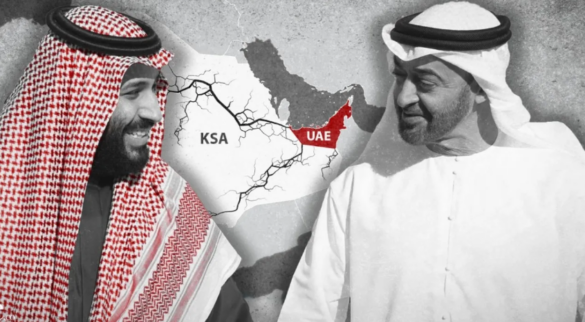
Brotherly Words, Strategic Blows: Decoding the Quiet Rift Between Saudi Arabia and the United Arab Emirates
When countries talk to each other they often say things in a nice way. This is very true in the world, where people use polite language to make disagreements sound less harsh.. Beneath the nice words the real issues are still there. A good example of this is what happened in December, when Saudi Arabia said some things about the United Arab Emirates that seemed friendly. Were actually about some serious problems between them. Saudi Arabia called the United Arab Emirates a “nation, which means they are like family even as they were having some big disagreements.
At first it seemed like Saudi Arabia was being nice to the United Arab Emirates.. If you look closer you can see that there were some big issues between them. This shows that when countries are allies they can still have problems. Saudi Arabia and the United Arab Emirates have been friends for a time but now they are starting to compete with each other.
The use of the word “brotherly” in talk is not new in the Gulf. Countries in the Gulf Cooperation Council often use language to talk about their disagreements.. When this language is used with military action or accusations it means that the relationship is under strain. Saudi Arabia and the United Arab Emirates have been working together for a time especially in the war in Yemen.. Over time they started to have different ideas about what to do.
Yemen is a place where Saudi Arabia and the United Arab Emirates have goals. For Saudi Arabia stability in Yemen is very important for its security. For the United Arab Emirates controlling the ports and trade routes is very important. This is why they are competing with each other in Yemen. Saudi Arabia wants to end the war in Yemen, which has cost a lot of money and caused problems. The United Arab Emirates on the hand is reducing its military presence in Yemen but still wants to have influence there.
When Saudi Arabia says that the United Arab Emirates is doing things that threaten its security it means that they have some disagreements. Even though they use language it is clear that they have some problems. This is not new in the world, where countries often use polite language to avoid escalating conflicts.
The idea of “brotherhood” in diplomacy is important. It means that countries use language to prevent conflicts from getting worse. By calling the United Arab Emirates a “nation Saudi Arabia may be trying to manage the tension between them. This is a pattern in the Gulf Cooperation Council, where countries often use nice language to preserve unity.
There is also competition between Saudi Arabia and the United Arab Emirates. Saudi Arabia is trying to become the economic hub in the region, which challenges the United Arab Emirates status as the main commercial center. This competition is not necessarily hostile. It does make their relationship more complicated.
Accusing an ally of threatening national security is a serious move even if it is said in a nice way. This kind of language is used to send messages to audiences, including people at home in the region and around the world. For Saudi Arabia emphasizing security concerns shows that it is willing to defend its interests within alliances.
The future of the relationship between Saudi Arabia and the United Arab Emirates is not clear. While they will likely remain allies their relationship is becoming more complex. They have ideas about foreign policy, economics and regional priorities, which is changing the dynamics of their alliance. The conflict in Yemen shows that close allies can disagree when their national interests are different.. The use of nice language suggests that they want to manage their tensions quietly rather than having a public conflict.
In the end the way countries talk to each other is changing. They use language to hide their real intentions. In the Middle East, where alliances are always changing, diplomatic language is both a shield and a signal. Saudi Arabias use of the word “brotherly” may be more about strategy than affection. It shows that they want to keep their relationship, with the United Arab Emirates but want to acknowledge their disagreements.