Every winter, Delhi stops being a city and turns into a question. A question that burns the eyes, scratches the throat, and settles quietly into the lungs. Who did this to us? And more importantly—why do we keep allowing it?
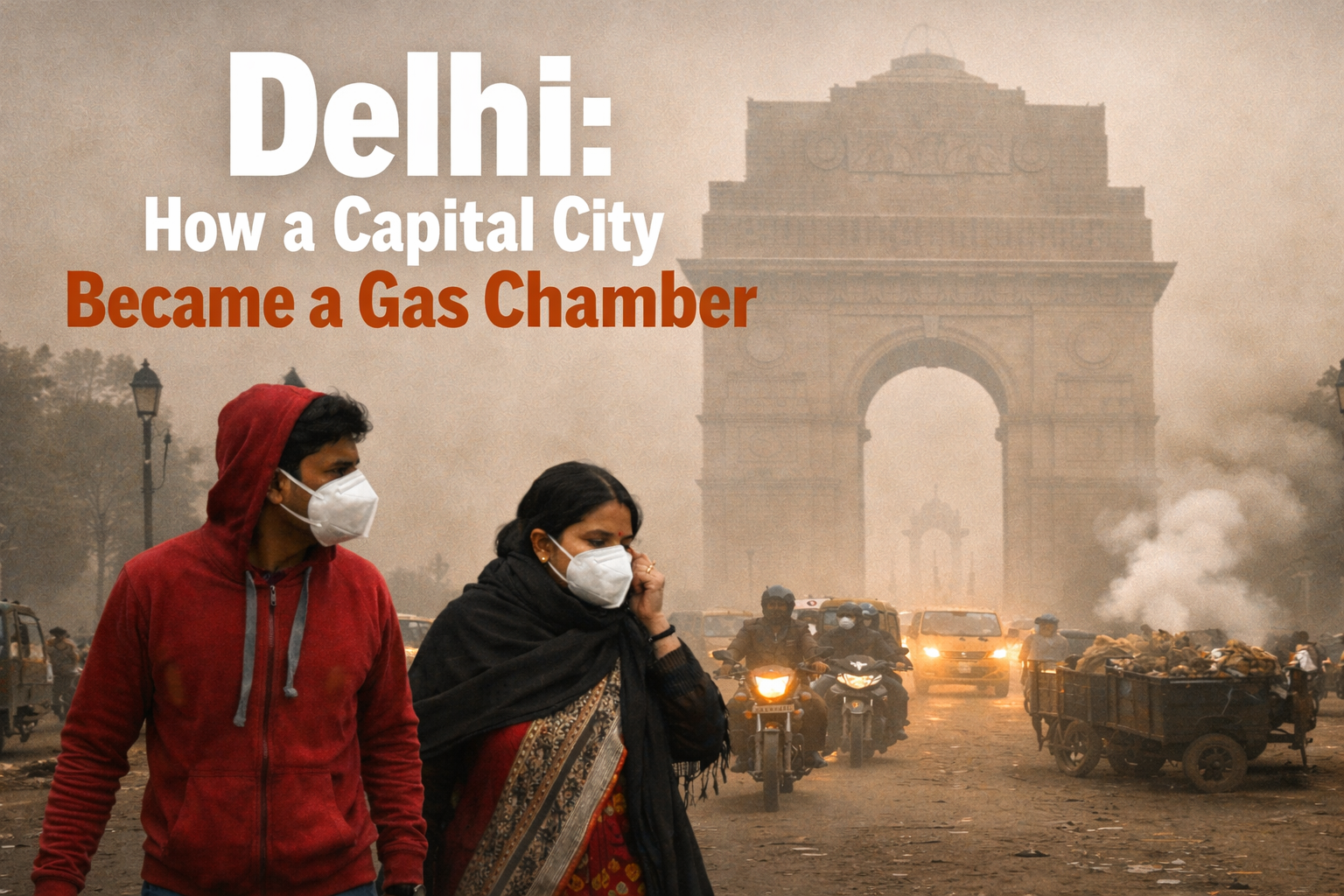
Calling Delhi a “Gas Chamber” is no longer exaggeration or media drama. It is lived reality. Schools shut, flights are delayed, hospitals overflow, and masks return—not for a virus, but for the air itself. The tragedy is not just the pollution. The tragedy is how predictable it has become.
Blame Is Easy. Responsibility Is Hard.
Factories are blamed. Farmers are blamed. Vehicles are blamed. Governments—past and present—are blamed. And yes, all of them play a role.
Industrial units cut corners because compliance costs money. Construction dust rises unchecked because deadlines matter more than lungs. Stubble burning continues because policy promises never translate into ground-level solutions for farmers. Vehicles multiply because public transport planning never matches population growth.
But here is the uncomfortable truth: none of this happens in isolation.
The Policy Theatre
Every year, policies arrive like seasonal decorations—odd-even schemes, temporary bans, emergency meetings, imported smog towers. They look decisive, sound serious, and fade away with the winter fog. Implementation remains weak, monitoring weaker, accountability weakest.
Environmental laws in India are not absent; they are ignored. Reports are written, committees are formed, deadlines are extended. Pollution does not come as a surprise—it comes as an annual event, yet we treat it like an unforeseen disaster.
Farmers Are Not the Villains
Reducing Delhi’s pollution crisis to stubble burning alone is convenient but dishonest. Farmers burn crops not out of defiance, but desperation. Sustainable alternatives exist on paper, not in practice. When policy does not meet livelihood reality, smoke becomes inevitable.
Blaming farmers without fixing procurement systems, subsidies, and crop cycles is moral laziness.
The Silent Majority: Us
And then there is us—the residents of Delhi.
We complain, but we comply. We cough, but we continue. We adapt instead of resist. Air purifiers replace outrage. Masks replace movements. We plan weekend getaways instead of demanding structural change.
We buy bigger cars knowing the roads are choking. We celebrate endless construction as “development” while ignoring the dust clouds it creates. We accept polluted air as the price of living in a capital city—and then take pride in surviving it.
That might be the most dangerous part of all.
Normalising the Abnormal
A city where children grow up knowing AQI numbers before learning multiplication tables is not resilient—it is compromised. When pollution becomes background noise, urgency disappears.
Delhi’s gas chamber is not just made of smoke. It is made of apathy, delayed decisions, fragmented responsibility, and collective surrender.
So, Who Is Responsible?
The honest answer is: everyone—and therefore no one feels accountable.
Governments act temporarily. Industries negotiate loopholes. Policies remain unimplemented. And citizens wait for someone else to fix it.
But air does not care about jurisdiction, elections, or excuses.
A City at a Crossroads
Delhi does not need another winter plan. It needs year-round courage—political, institutional, and civic. Real enforcement. Real investment in clean alternatives. And a citizenry that refuses to accept poison as destiny.
Until then, the gas chamber will not just return every winter.
It will define who we are.
The question is no longer why Delhi is polluted. The question is why we are still okay with it.