Prof. Avanish Kumar
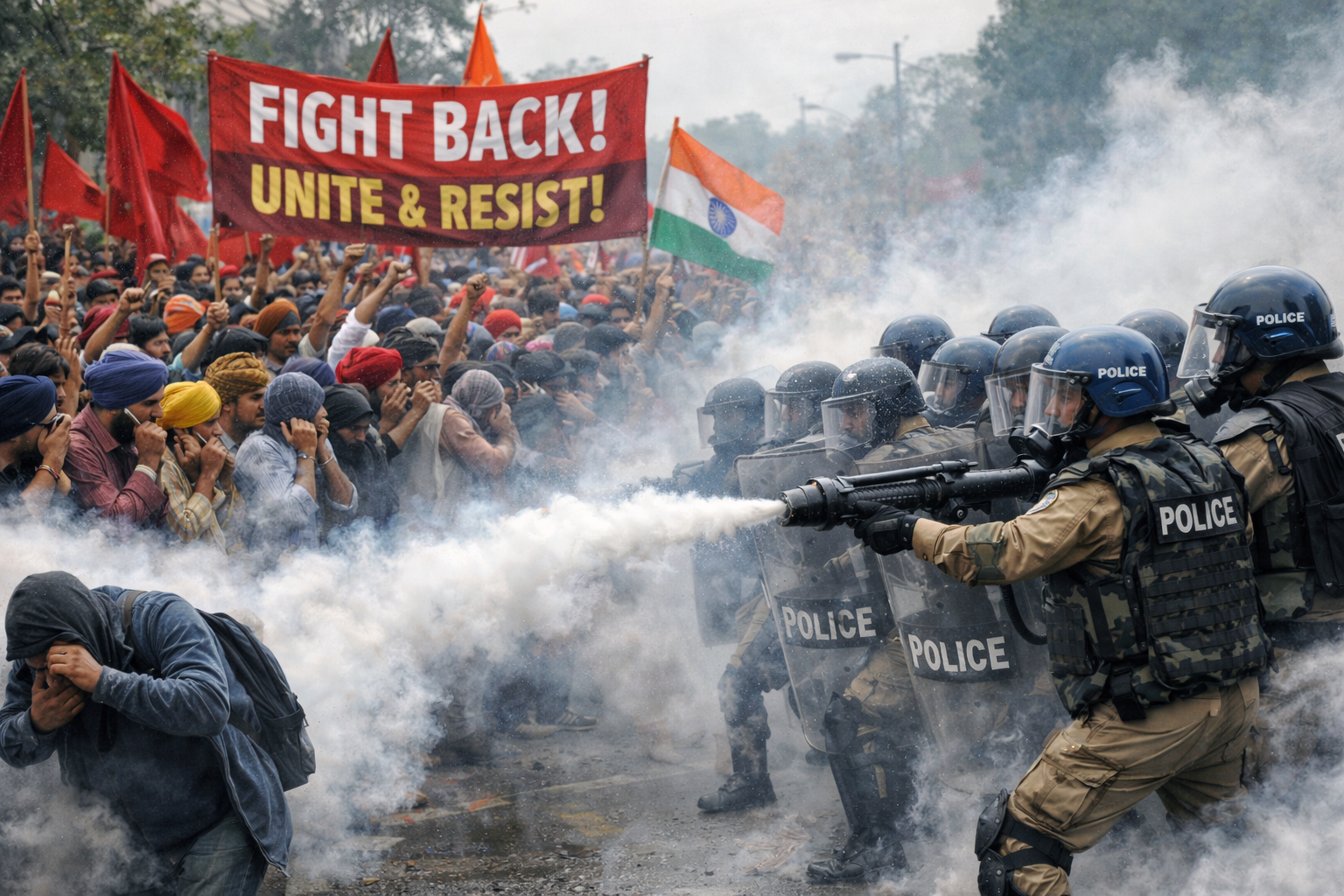
The recent rise of protests by youths on the streets, with public disenchantment expressed over governments in Dhaka, Bangladesh; Islamabad, Pakistan; Kathmandu, Nepal; and Colombo, Sri Lanka, is a recipe for realization about changing goals in 21st-century democratic governance. More so when the street protests are not limited to South Asia, but rather they transcend all socio-economic and political reasoning across the geographies. A review of literature on street protests serves as a reminder to policymakers that the globalization of dissent, turning into street protests by youth, is on the rise across the world. In last 5 years protest was witnessed in Bosnia and Herzegovina justice for David protest in 2018; Australia, Belgium, Poland and India farmers and CAA protest in 2023-24; Argentina economic crisis protest in 2022; other than ongoing, Bangladesh garment in 2019; Brazil indigenous land rights protest in 2021; Bulgaria corruption protest in 2020; Chad military rule protest in 2021; Chile subway fare protest in 2019; United States protest against police brutality in 2020; Poland abortion rights protest in 2020; United Kingdom protest on peoples vote in 2018 and rising price protest in 2022 pro-doctors protest in 2023; Tunisia power grab protest in 2021, Thailand anti-government protest in 2021, Sudan million man march in 2020, Sri Lanka economics crisis protest in 2022, Myanmar Coup protest in 2021, Bangladesh in 2024-25 and Nepal in 2025; and many more similar protests. According to the Carnegie Endowment for International Peace, in the last 12 months, 159 protests erupted against the government in 71 countries worldwide. Currently, there are 30 active protests across the world. These events may be sporadic for domestic administration, but certainly, the globalization of protest is a source of concern for policymakers. An analysis indicates protest is seeded largely with a delayed and undignified process of access to rights, an unhearing government, and political impingement into independent space, seeds protest ranging from one week to one year. Though there is no significant correlation with peak size and duration, the closure of protests indicates the significance of the government’s early recognition and response to domestic legislative and executive failures. The fault line that converts street protest into movement lies in mediating classification between individual and institutional failures, often dubbed as ideological failure to connect with the generation. Irrespective of internal faultiness, these protests are often prey to global powers.
These protests cut across the geographies have one common – overwhelming participation of emotional youth on the streets to unleash anger against the establishment. During these angers, they are converted into socially constructed and classified perpetrators. It may be biased and based on selective evidence. The correlation between protest and protestors remains fuelled by the rise of an ICT-enabled worldview in every hand with a mobile phone. Does it signal a shift in the goal post of governance in the 21st Century, with rapidly evolving political and emotional crises in a network society? While the presence of youths has always remained critical in several political revolutions in every society, what has shifted the gears are speed and scale of protest formation and sense of political fumigation with access to ICT. The protest formation spread within 24 hours with political fumigation in street protests as demand for political re-establishment of the government, as it goes beyond fulfilment of specific demands to a generic demand.
In the formation of protest, the role of age-old newspapers and other traditional political platforms has drastically shifted with the interconnected audio-visual ICT world. ICT has turned age-old settled reading-writing unidirectional sources of news and views into multidirectional voices and vectors to spark youth disenchantment without delay. Traditionally, consumers of newspapers were often classified by a certain age, interest, and readability. ICT embedded audio-visual news forgo region, language, age, and stage of life. It also provides an opportunity for individuals to capture and curate news for public entertainment, emotions, and economics. Popularly accepted that ‘bad news travels at the speed of light, good news travels like molasses’. Thus, the contemporary news platter provides a hot recipe for the increased spectrum of good to bad governance range for 15 to 72-73, with the world average increased life expectancy. Unlike the past, which has made extremely heterogeneous governance demand that entails unattended youth and the elderly.
With access to omnipresent ICT, the political worldview takes birth at the age of 15 when a student transitions to the unprotected world of dilemmas from the protected 10th grade in school. The age and stage of 15 years is the time to resolve the dilemma and demand for career pathways. Among the age group between 15-25, if settled, the professional vulnerability reaches its peak, making it a volatile age with an increased gap between diverse personal aspirations and performance. The age between 25 and 45 is in the midst of short and long-term government demands that address family-oriented services. Post 45 person is mediating between demands from two generations in the family, the elderly parents and the young kids. This heterogeneous group of 15-45, in the political lens of government, remains low on priority beyond the election.
Unlike population studies, political categorization into typically two distinct demographic categories, below 15 and above 65 years, as the dependent population requires expansion. ICT has politically engaged early in the lives of young people as active social media users, and also, the population size of the 65 and above population has increased drastically. Most of the developing economies, including India, have the highest number of young people, though ageing is rapidly progressing. The median age in India was 27 years old in 2020, meaning half the population was older than that, half younger. This figure was lowest in 1970, at 18.1 years. According to UNFPA, the current elderly population of 153 million (aged 60 and above) is expected to reach a staggering 347 million by 2050. This demographic shift is not merely a statistical phenomenon; it’s a socio-political transformation of unparalleled magnitude with far-reaching implications.
The youth voice and socio-political void on the street is a new form of democratic politics in the world. While youth voice emerged out of hope, the unattended socio-political void creates space for unlawful elements to exploit the situation. Often, these domestic vulnerabilities remain in the eye of global powers to expand their footprints. Public disenchantment is not about being against the State; it is a conflict between expectation and experience that every youth faces today. The vulnerability is crystallized with little or no opportunities and options for constructive engagement of youth. In elected democracies, while the politics of youth forms a determinant of the electoral process, the evidence suggests that youth seize their relevance after the formation of the government. Government remains entangled with wicked problems of food, shelter, and insinuating fragmentation of political identities, more often, contestation to secure its political space. According to a study of youth policies in 32 countries across the continents, including India indicates need for policy aligning to three streams of youth engagement; firstly to adopt Human Capital theory, the Germany policy of NEET (analyse not in Education, Employment or Training); second to analyse with Social Inclusion theory to analyse how policies and politics fosters or hinders youth participations, and right based approach to analyse legal framework and constitutional provisions. It would not be incorrect to state that the formation and fumigation of street protests by youths provides platter of learning that all politics is power, but not all power is politics.